
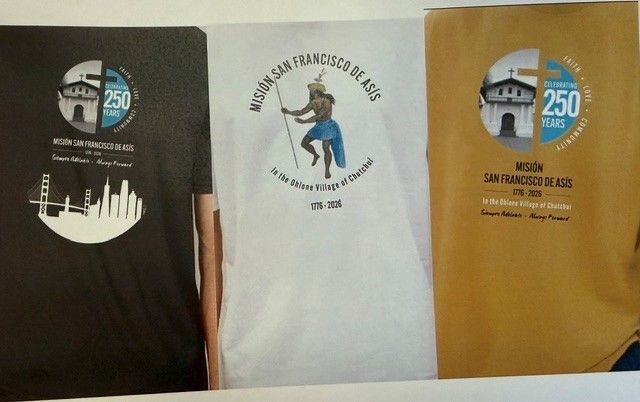
Commemorative 250th T-shirts for sale, three to choose from: Black, White, and Yellow. $15, get yours today!
The Curator’s Corner:
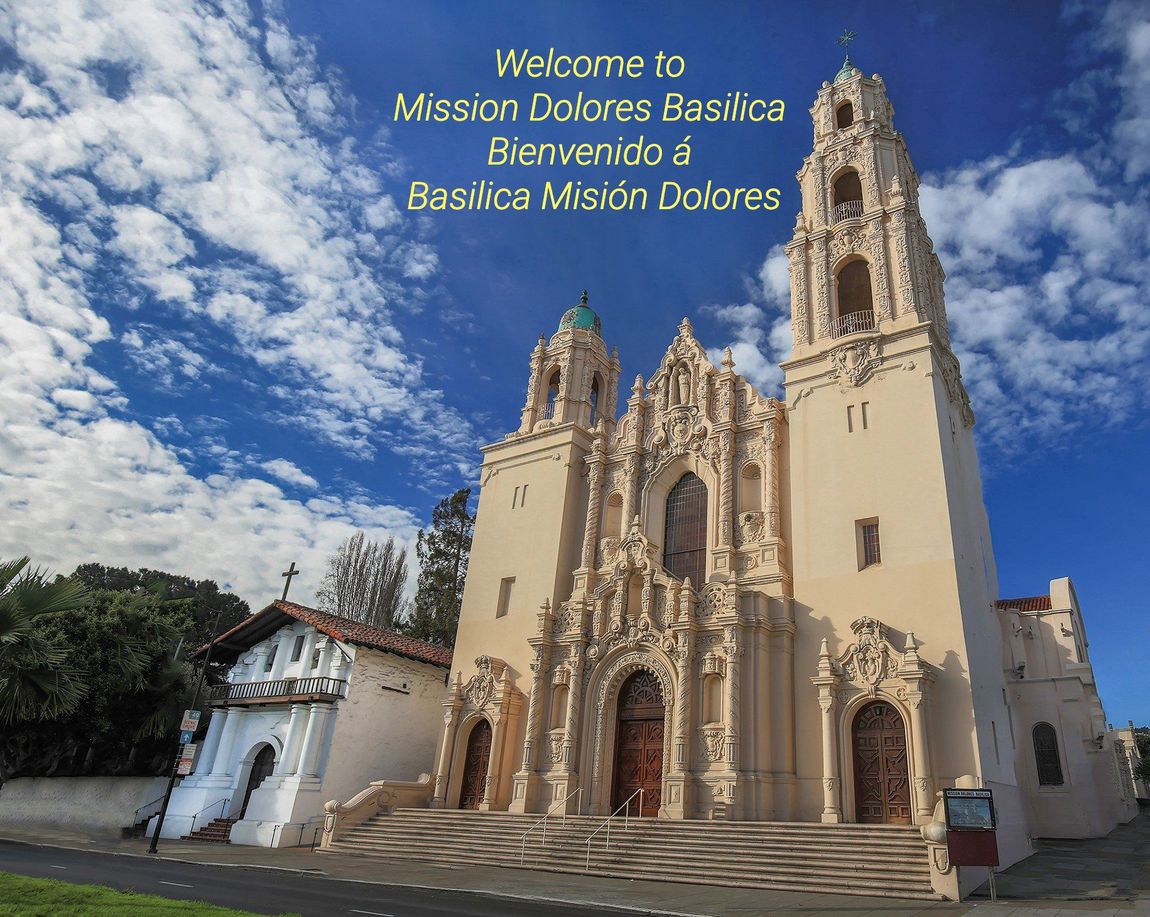
From 1876 to 1906, the faithful of Mission Dolores attended a brick church of Gothic design, located on the corner of Dolores and Sixteenth Streets. After its destruction by the 1906 earthquake, a temporary building was used from 1910 to 1918.
The present church had its cornerstone laid in 1913 by Reverend P. J. Cummins. It was constructed to withstand earthquakes, for its predecessor on the corner had been badly damaged during the earthquake of April 18, 1906, although the Mission escaped. The first Holy Mass was offered on Christmas Day 1918.
The towers were added in 1926, and retain the touch of Spain first introduced by the Padres. Inside, the architecture of the Church has a taste of the Orient, the Byzantine as might appear in Venice or Constantinople. It reminds us of the years when the Moors invaded Spain and blended their style with the western world.
The Church was repaired on the outside and painted by Bishop James T. O'Dowd. The next pastor, Bishop Merlin Guilfoyle, embellished the inside with beautiful carvings of the Seven Dolors, Stations of the Cross, and decorative paintings ornamented as in Old Spain by gold leaf.
The Papal Coat of Arms reminds us that on February 8, 1952 (Seventy-Five years ago next year), Pope Pius XII honored the parish church of Mission Dolores with the title of Basilica.
To be continued…..


Mass Times
Saturday Vigil: 5:00pm -- Old Mission
Sunday:
8:00am & 10:00am (English)
12:00pm (Español)
Daily Mass:
Monday-Saturday: 8:00am -- Old Mission
Confession:
By appointment/por cita
Eucharist Adoration:
Friday: 3:00pm -- Old Mission
First Friday of the month: 4pm
Livestream Rosary:
7:00pm (Español)
8:00pm (English)
Livestreamed Videos
For your convenience, live and recorded videos are available at our:

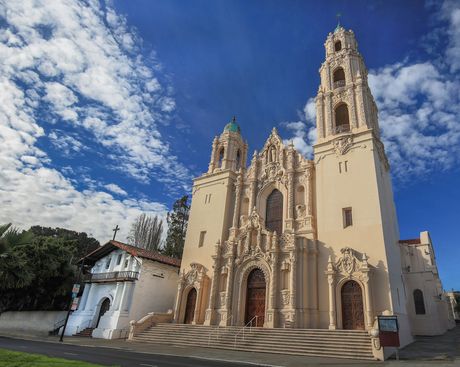
Mission Dolores has always had a central place in the religious, civic, and cultural life of San Francisco. Misión San Francisco de Asís was founded June 29, 1776, under the direction of Father Junipero Serra and is both the oldest original intact Mission in California and the oldest building in San Francisco. Today, the Mission Dolores Parish comprises both the Basilica and the Old Mission.
True to its origins, the Basilica Parish of Mission Dolores reflects the remarkable diversity and vibrancy of modern San Francisco. Located at the crossroads of the City's Mission District, Castro District, the Lower Haight, Noe Valley, and Upper Market Street neighborhoods, Mission Dolores parishioners come from an enormous array of cultures, places, and backgrounds to worship together.
The Old Mission's religious, historic, and architectural significance makes it a unique and memorable destination for visitors to San Francisco. We welcome all to come visit the birthplace of San Francisco. For Old Mission visitor information, please click here.
We invite you to explore this website to learn more about the people, community, and history of Mission Dolores.
We are a welcoming Catholic community called by God to live out the message of Christ in love and service to all people.

Click on the photo below for the video of the 33rd Annual Basilica Choir Candlelight Christmas Concert from December 2024